
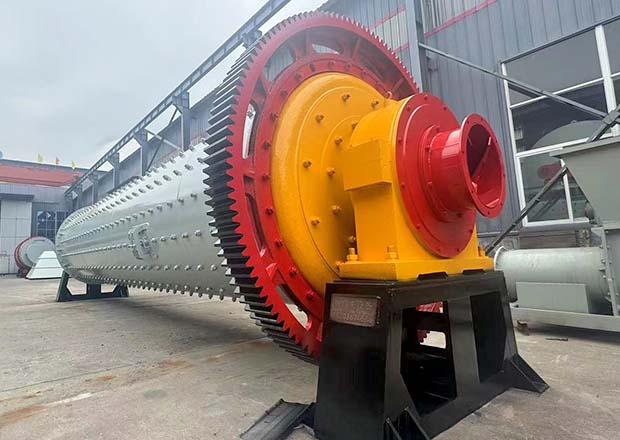
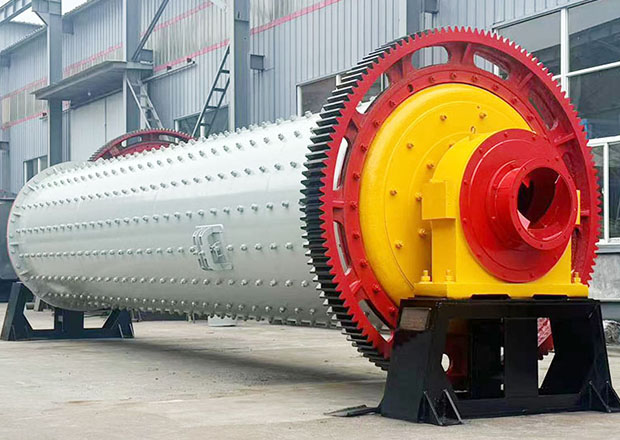
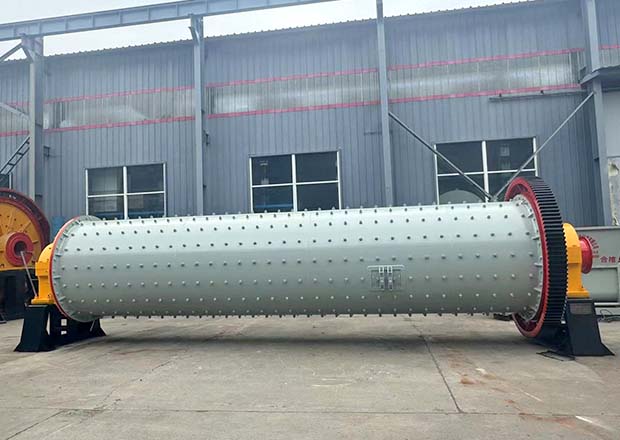
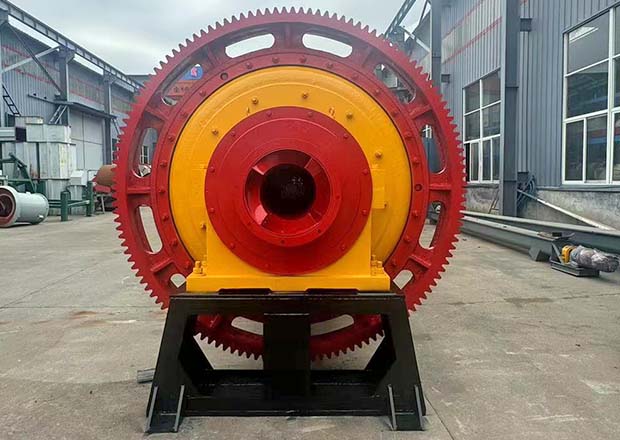
Slag ball mill (also called slag grinding mill or GGBFS ball mill) is a specialized grinding equipment used to grind granulated blast furnace slag (GBFS) into fine powder known as GGBFS (Ground Granulated Blast Furnace Slag). Slag is a by‑product of ironmaking with latent hydraulic properties; when ground to high fineness, it becomes a valuable additive in cement and concrete, improving durability, strength, and reducing CO₂ emissions.
Slag ball mill (also called slag grinding mill or GGBFS ball mill) is a specialized grinding equipment used to grind granulated blast furnace slag (GBFS) into fine powder known as GGBFS (Ground Granulated Blast Furnace Slag). Slag is a by‑product of ironmaking with latent hydraulic properties; when ground to high fineness, it becomes a valuable additive in cement and concrete, improving durability, strength, and reducing CO₂ emissions.
Our slag ball mill is a heavy‑duty, closed‑circuit system consisting of a ball mill coupled with a high‑efficiency dynamic classifier. Because slag is harder and more difficult to grind than cement clinker, the mill features super‑wear‑resistant liners, optimized media grading, and a large grinding length to achieve the high Blaine values (typically 420–500 m²/kg) required for slag cement. As a professional ball mill manufacturer, we provide complete slag grinding plants including drying (if needed), grinding, classification, and product collection.
Applicable materials: granulated blast furnace slag (GBFS), air‑cooled slag (after crushing), steel slag, nickel slag, and other metallurgical slags.
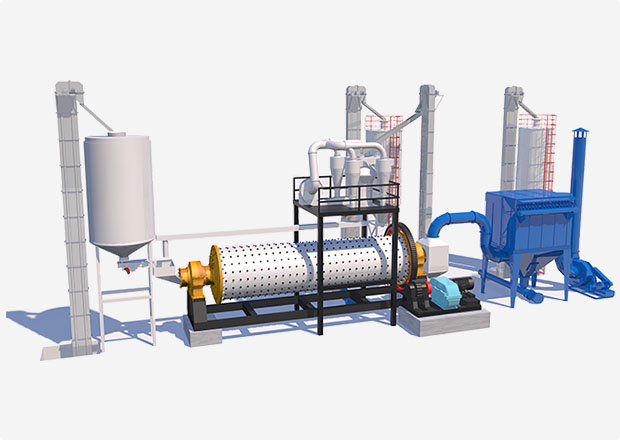
Step 1 – Feeding & Pre‑Drying (if needed)
Granulated blast furnace slag (≤20 mm) is fed via a weigh belt feeder. For drying‑grinding, hot gas (200–300°C) is drawn through the mill.
Step 2 – Coarse Grinding (Chamber 1)
The first chamber contains large steel balls (Φ70–100 mm) with stepped liners. The balls impact‑crush the hard slag lumps.
Step 3 – Intermediate Grinding (Chamber 2)
A slotted diaphragm allows material into the second chamber, where medium balls (Φ40–60 mm) continue grinding.
Step 4 – Fine Grinding (Chamber 3)
The third chamber contains small balls (Φ12–30 mm) and classifying liners. This chamber produces the high specific surface area required for slag cement. Forced airflow carries fine particles toward discharge.
Step 5 – Classification & Collection
Material exiting the mill is lifted to a dynamic air classifier. Fines (finished slag powder, e.g., Blaine 450 m²/kg) are collected by a bag filter. Coarse particles return to the mill. An optional magnetic separator can remove iron before product storage.
Slag’s high silica and alumina content rapidly wears ordinary steel. Our slag ball mill is lined with ultra‑high chromium cast iron (HRC ≥62). The grinding media are forged alloy steel balls with hardness HRC 60–64 and breakage rate <0.5%. Main bearings are heavy‑duty and designed for >15 years of operation.
Open‑circuit slag grinding wastes up to 30% energy due to over‑grinding. Our closed‑circuit ball mill uses a high‑efficiency dynamic classifier (V‑separator or O‑sepa) that removes fine product immediately. This cuts specific energy consumption from >55 kW·h/t to 38–48 kW·h/t. Adding a roller press before the mill can further reduce energy by 15–20%.
The dynamic classifier is PLC‑controlled, allowing real‑time adjustment of product fineness. We can reliably produce slag powder with Blaine values from 350 m²/kg (coarse) up to 600 m²/kg (ultra‑fine). The system maintains Blaine fluctuation within ±10 m²/kg, ensuring consistent cement performance.
Slag grinding generates significant heat, which can reduce mill efficiency and damage bag filters. Our mill features water spray cooling on the shell and optimized airflow to keep the outlet temperature below 110°C. For hot slag, we can also install a separate air cooler after the mill. & Drying‑grinding: For GBFS with 5–10% moisture, we supply a mill with a hot gas inlet (using waste heat or a hot air generator). Hot gas dries the slag during grinding, eliminating a rotary dryer. Iron removal: A magnetic separator (drum or cross‑belt) installed after the mill removes metallic iron particles, improving product purity.
| Model | Dia.×Length (m) | Capacity (t/h) * | Blaine (m²/kg) | Motor Power (kW) |
|---|---|---|---|---|
| Φ2.2×7.5m | 2.2×7.5 | 5–8 | 420 | 380 |
| Φ2.4×11m | 2.4×11 | 10–15 | 450 | 630 |
| Φ2.6×13m | 2.6×13 | 15–22 | 450 | 1000 |
| Φ3.0×13m | 3.0×13 | 22–32 | 480 | 1600 |
| Φ3.2×13m | 3.2×13 | 30–45 | 480 | 2000 |
| Φ3.8×13m | 3.8×13 | 45–65 | 500 | 3150 |
| Φ4.2×14.5m | 4.2×14.5 | 70–100 | 500 | 4500 |
*Capacity based on GBFS feed ≤15mm, moisture <3%, target Blaine 450 m²/kg. Values depend on slag source.*
| Model | Dia.×Length (m) | Capacity (t/h) | Inlet Moisture | Motor Power (kW) |
|---|---|---|---|---|
| Φ2.6×13m | 2.6×13 | 12–18 | ≤10% | 1000 |
| Φ3.0×13m | 3.0×13 | 20–28 | ≤10% | 1600 |
| Φ3.2×14m | 3.2×14 | 28–40 | ≤10% |
2000 |
| Parameter | Value |
|---|---|
| Max. feed size | ≤15–20 mm (recommended ≤10mm for best efficiency) |
| Output Blaine | 350 – 600 m²/kg (adjustable) |
| Feed moisture (dry mill) | ≤3% (higher requires drying‑grinding) |
| Grinding method | Dry (standard) / Drying‑grinding |
| Circuit type | Closed‑circuit (mandatory) |
| Number of chambers | 3 |
| Liner material | High chromium cast iron (HRC ≥62) / Chrome‑moly alloy |
| Grinding media | Forged alloy steel balls, graded (Φ12–100 mm) |
| Optional features | Roller press pre‑grinding, magnetic separator, water spray cooling, hot gas system |
Slag source & grindability – Granulated blast furnace slag (GBFS) is most common. Provide a sample for Bond Work Index testing. GBFS typically has Wi = 22–28. Steel slag is harder and more abrasive.
Target Blaine fineness – For cement blending (GGBFS), typical Blaine is 420–480 m²/kg. For high‑performance concrete, 500–550 m²/kg. Our mill can achieve up to 600 m²/kg.
Moisture content – Fresh GBFS often has 5–10% moisture. Below 3%: standard dry mill. Above 3%: choose drying‑grinding mill with hot gas.
Capacity requirement – State your required tons per hour. We will match the optimal ball mill capacity and advise on pre‑grinding (roller press) if needed.
Energy cost considerations – Slag grinding is energy‑intensive. A closed‑circuit with high‑efficiency classifier is mandatory. Adding a roller press reduces power by 15–20% but increases capital cost.
Iron contamination limit – For high‑purity slag powder (e.g., for white cement or special applications), specify a magnetic separator or ceramic lining.
After‑sales support – Installation, commissioning, training, and spare parts. Our team provides 24/7 support.
Slag grinding is fundamentally different from clinker or limestone grinding. Two critical factors determine success: grindability and Blaine fineness. Here is what you need to know.
| Property | Slag (GBFS) | Cement Clinker |
|---|---|---|
| Bond Work Index (kW·h/t) | 22 – 28 | 15 – 18 |
| Hardness (Mohs) | 5 – 6 | 3 – 4 |
| Specific energy to 450 m²/kg | 40 – 50 kW·h/t | 25 – 35 kW·h/t |
| Optimum mill L/D ratio | 3.0 – 3.5 | 2.5 – 3.0 |
| Preferred circuit | Closed‑circuit with classifier | Closed‑circuit (or open) |
| Target Blaine (m²/kg) | Recommended Chamber 3 Media Size | Classifier Type | Notes |
|---|---|---|---|
| 350 – 400 | Φ20–30 mm | Standard dynamic | Suitable for low‑grade blending |
| 420 – 480 | Φ15–25 mm | High‑efficiency (V‑separator) | Standard GGBFS for cement |
| 500 – 550 | Φ12–20 mm + classifying liners | High‑efficiency + secondary classifier | High‑performance concrete |
| >550 | Φ12–15 mm + ceramic media (optional) | Ultra‑fine classifier + air sweep | Requires expert tuning |
Open‑circuit slag grinding is never recommended because:
Over‑grinding produces excessive fines and wastes energy
Without a classifier, product Blaine fluctuates widely
Mill temperature rises uncontrolled
Our closed‑circuit ball mill with dynamic classifier is the industry standard for slag. It precisely controls Blaine, reduces energy, and prevents overheating.
Pro tip: For slag grinding, a roller press + ball mill combined system is the most energy‑efficient configuration. The roller press reduces feed size from 50–60mm down to 2–5mm, cutting the ball mill’s work by 30–40%. We can design and supply both options.
ISO9001 & CE certified – Strict quality control from raw material to final assembly.
20+ years in grinding equipment – Specialized in slag ball mills for GGBFS production.
Heavy‑duty wear technology – Patented high chromium (HRC ≥62) liners with 50% longer life for slag.
Energy‑saving closed‑circuit design – Lowers specific energy to 38–48 kW·h/t from typical 55+.
High Blaine capability – Reliably produces slag powder from 350 to 600 m²/kg.
Drying‑grinding & iron removal options – Complete solutions for wet slag and high‑purity products.
Full process support – Lab test (Work Index, Blaine) → engineering → manufacturing → installation → commissioning → training.
Global service network – Engineers available for on‑site visit and 24/7 remote troubleshooting.
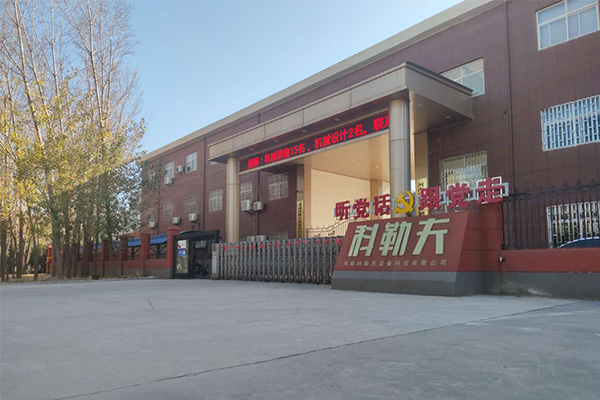
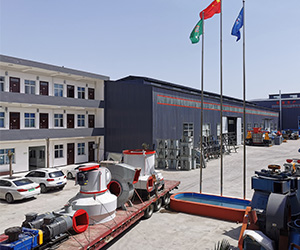
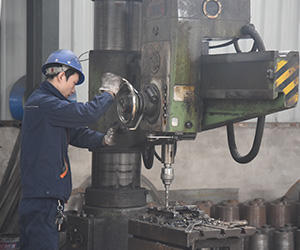
Kolev Equipment Technology Co., Ltd. is a large-scale private technology enterprise specializing in the research, development, production, and sales of mining and metal ore processing equipment. With over 20 years of experience in ultra-fine grinding, industrial drying, and crushing sand making industries, we provide intelligent solutions and mature supporting products worldwide.
Tell us your needs. We will match the best model for you and send a solution + reference quote within 24 hours.
We're here to help with all your inquiries. Send us a message and we'll get back to you promptly.
Fill out the form below and we'll contact you soon