
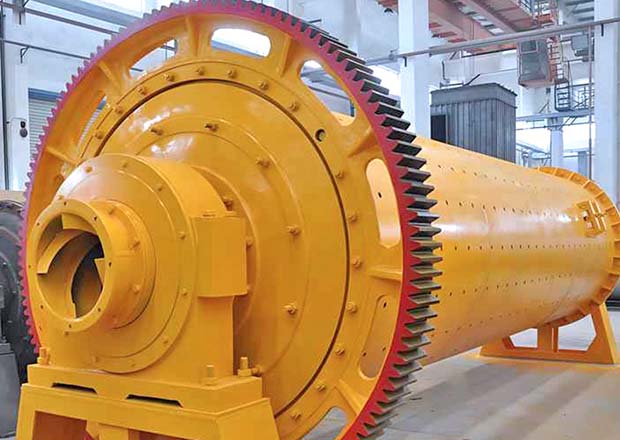
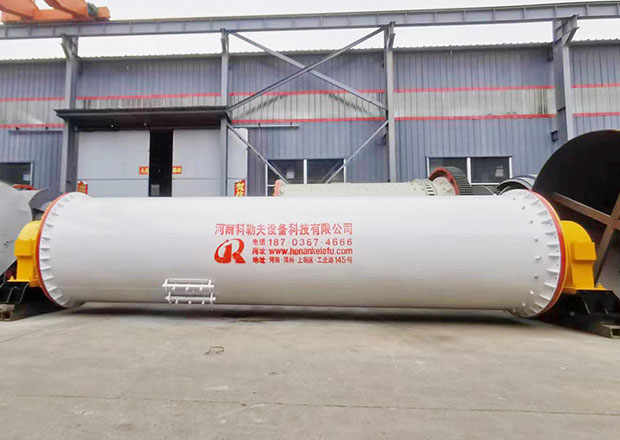
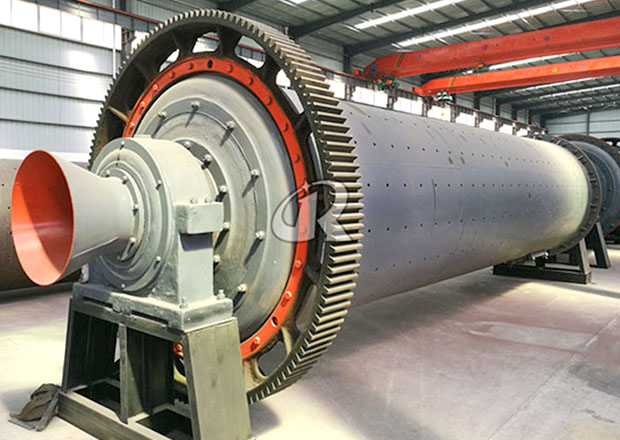
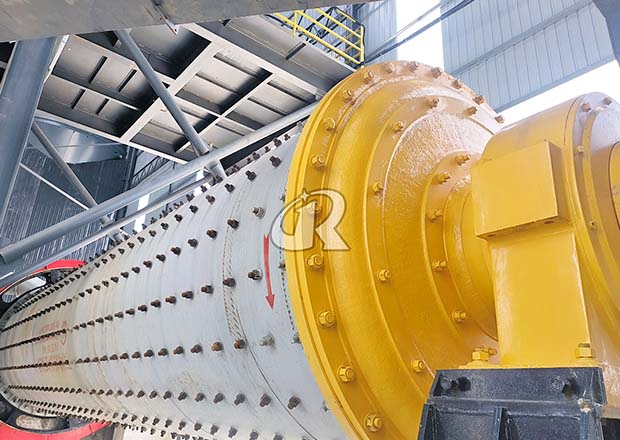
Limestone ball mill (also called limestone grinding mill or lime slurry ball mill) is a specialized limestone grinding machine that reduces limestone, quicklime, or hydrated lime into fine powder or slurry.
Limestone ball mill (also called limestone grinding mill or lime slurry ball mill) is a specialized limestone grinding machine that reduces limestone, quicklime, or hydrated lime into fine powder or slurry. It is essential in:
Flue Gas Desulfurization (FGD) – producing limestone slurry (90% passing 325 mesh or 44µm) for coal‑fired power plants
Cement raw material preparation – grinding limestone as the main component of raw meal
Lime production line – preparing pulverized limestone for calcination into quicklime
Metallurgical industry – as fluxing agent for steelmaking
Paper & plastic fillers – ultra‑fine limestone powder (95% <400 mesh)
Our limestone ball mill features a horizontal rotating cylinder divided into two grinding chambers with wear‑resistant liners. It can be configured for dry grinding (with air classifier) or wet grinding (with hydrocyclone for slurry). As a professional ball mill manufacturer, we offer complete solutions based on your product type and process requirements.
Applicable materials: limestone (CaCO₃), quicklime (CaO), hydrated lime (Ca(OH)₂), marble, chalk, gypsum, and other soft to medium‑hard minerals (Mohs ≤4).
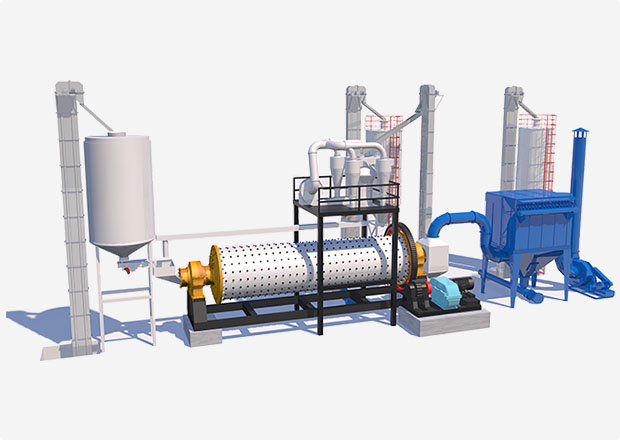
Step 1 – Feeding
Limestone (≤25 mm) is fed via a weigh belt feeder. For wet grinding, water is added simultaneously at the inlet.
Step 2 – Coarse Grinding (Chamber 1)
Large steel balls inside the first chamber are lifted by rotation and then cascade/fall, impact‑crushing the limestone.
Step 3 – Material Flow to Second Chamber
Material passes through a slotted diaphragm into the second chamber. The diaphragm retains grinding media but allows fines through.
Step 4 – Fine Grinding (Chamber 2)
Smaller steel balls and classifying liners grind the limestone to target fineness. For dry mills, hot air may flow through to remove moisture.
Step 5 – Classification & Collection
Dry system: Ground material is discharged and lifted to a dynamic air classifier. Fines (product) are collected by bag filter or cyclone; coarse returns to mill.
Wet system: Slurry overflows from the discharge end and is pumped to a hydrocyclone. Underflow (coarse) returns to mill; overflow is finished slurry (90% <325 mesh) sent to FGD tank.
Our limestone grinding mill uses a two‑chamber design with classifying liners in the fine grinding zone. First chamber (large balls: Φ60–90 mm) crushes feed; second chamber (small balls: Φ15–40 mm) performs efficient fine grinding. Output is 15–20% higher than conventional mills.
This energy‑saving ball mill reduces over‑grinding and lowers specific energy consumption by 4–7 kW·h per ton of limestone (from ~28 kW·h/t down to ~21 kW·h/t). Advanced lubrication system cuts grease consumption by 30%.
All contact parts are engineered for long life: high chromium cast iron liners (HRC ≥58), durable grinding media (breakage rate <0.5%), and reinforced feed/discharge ends. Main bearing service life >10 years.
The PLC‑based control system automates feed rate, mill load, bearing temperature, and separator speed. For wet FGD mills, it also controls water addition to maintain slurry density (25–30% solids). Remote SCADA monitoring available. We supply both dry limestone ball mills (with air classifier) and wet limestone ball mills (with hydrocyclone for FGD slurry). The same mill shell design can be adapted to either process, allowing future conversion if needed.
| Model | Dia.×Length (m) | Capacity (t/h) * | Fineness (Mesh) | Motor Power (kW) |
|---|---|---|---|---|
| Φ1.83×7m | 1.83×7 | 3–5 | 80–200 | 135 |
| Φ2.2×7.5m | 2.2×7.5 | 6–10 | 80–200 | 245 |
| Φ2.4×10m | 2.4×10 | 12–18 | 200–325 | 400 |
| Φ2.6×13m | 2.6×13 | 18–25 | 325 | 630 |
| Φ3.2×13m | 3.2×13 | 30–45 | 325 | 1250 |
| Φ3.8×13m | 3.8×13 | 50–70 | 325–400 | 2000 |
Capacity based on feed ≤20mm, target 80% passing 200 mesh. Custom capacities up to 150 TPH available.
| Model | Dia.×Length (m) | Slurry Output (m³/h) | Solids Content | Motor Power (kW) |
|---|---|---|---|---|
| Φ2.4×4.5m | 2.4×4.5 | 15–25 | 25–30% | 280 |
| Φ2.8×5.5m | 2.8×5.5 | 30–45 | 25–30% | 500 |
| Φ3.2×6.5m | 3.2×6.5 | 50–70 | 25–30% | 800 |
| Φ3.6×7.5m | 3.6×7.5 | 80–120 | 25–30% | 1250 |
| Parameter | Value |
|---|---|
| Max. feed size | ≤20–25 mm |
| Output fineness | 80 – 400 Mesh (0.044 – 0.18 mm) |
| Feed moisture (dry mill) | ≤8% (higher with hot air) |
| Grinding method | Dry / Wet |
| Circuit type | Closed‑circuit (recommended) or open‑circuit |
| Number of chambers | 2 (or 3 for ultra‑fine) |
| Liner material | High chromium cast iron / High manganese steel |
| Grinding media | High chromium steel balls / forged steel balls |
Final product form – Do you need dry powder or wet slurry? This is the most important decision (see Section 7).
Target fineness – For FGD: 90% <325 mesh (44µm). For cement raw meal: 80% <80 mesh. For paper filler: 95% <400 mesh.
Capacity requirement – State required tons per hour (dry) or cubic meters per hour (slurry). We will match the optimal ball mill capacity.
Feed moisture – Above 5% moisture? Dry milling needs hot air; wet milling handles any moisture easily.
Limestone abrasion index – Provide a sample for lab testing. Higher abrasion requires high chromium liners.
Installation space & power – We provide customized layout drawings.
After‑sales support – Installation, commissioning, training, and spare parts. Our 24/7 team supports you.
| Feature | Dry Limestone Ball Mill | Wet Limestone Ball Mill |
|---|---|---|
| Final product | Dry powder (80–400 mesh) | Slurry (25–30% solids, 90% <325 mesh for FGD) |
| Typical applications | Cement raw meal, lime production, metallurgical flux, dry filler | FGD (power plants), wet desulfurization, pigment slurry |
| Energy consumption | 22–30 kW·h/t (dry powder) | 18–22 kW·h/t of limestone (as slurry), plus no separate mixing |
| Wear on liners & media | Moderate to high (due to dry abrasion) | Lower (water cushions impact and reduces dust abrasion) |
| Dust control | Requires baghouse filter (≥99.9% efficiency) | No dust – closed water circuit |
| Moisture in feed | Needs <8% moisture; hot air dryer may be required | Accepts any moisture; water added for process |
| Equipment complexity | Mill + air classifier + bag filter + fan + hot air system (if needed) | Mill + hydrocyclone + slurry tank + pumps |
| Space requirement | Larger (multiple components) | Compact |
| Best for | Dry powder products, cement plants, lime kiln feed | Power plant FGD systems, wet grinding plants |
Choose Dry Limestone Ball Mill if: Your final product must be a dry powder (e.g., cement raw meal, lime kiln feed, metallurgical flux, or dry industrial filler). You have low feed moisture or are willing to install a hot air drying system.
Choose Wet Limestone Ball Mill if: You are producing limestone slurry for Flue Gas Desulfurization (FGD) in a power plant. Or your feed has high moisture and you want lower energy consumption and zero dust. Wet mills are also simpler to operate and maintain.
Pro tip: Many buyers start with a dry mill for general powder production, but for FGD applications, wet ball mills are now the global standard due to lower operating costs and better slurry consistency. If you are still unsure, send us your sample – we will recommend the most economical solution.
ISO9001 & CE certified – Strict quality control from raw material to final assembly.
20+ years in grinding equipment – Specialized in limestone ball mills for FGD, cement, and lime plants.
300+ successful projects worldwide – Including power plants (FGD), cement lines, and standalone grinding stations.
In‑house wear technology – Patented high chromium liners with service life up to 5 years for limestone.
Full process support – Lab test → engineering → manufacturing → installation → commissioning → training.
Global service network – Engineers available for on‑site visit and 24/7 remote troubleshooting.
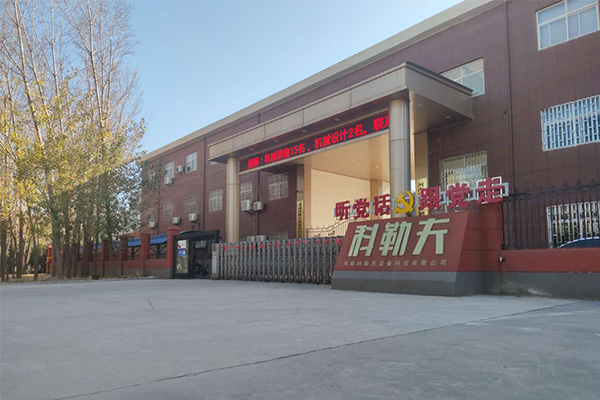
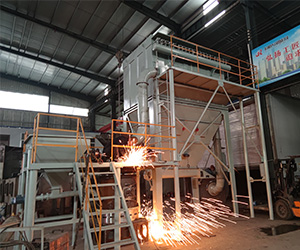
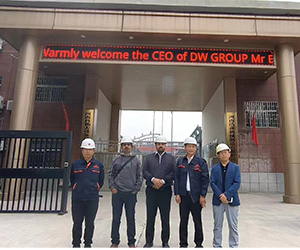
Kolev Equipment Technology Co., Ltd. is a large-scale private technology enterprise specializing in the research, development, production, and sales of mining and metal ore processing equipment. With over 20 years of experience in ultra-fine grinding, industrial drying, and crushing sand making industries, we provide intelligent solutions and mature supporting products worldwide.
Tell us your needs. We will match the best model for you and send a solution + reference quote within 24 hours.
We're here to help with all your inquiries. Send us a message and we'll get back to you promptly.
Fill out the form below and we'll contact you soon