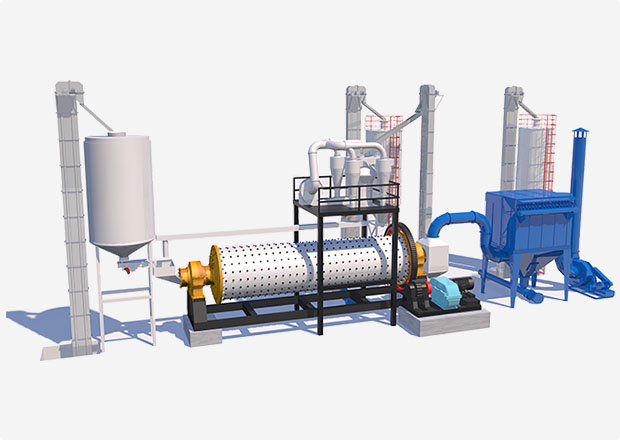
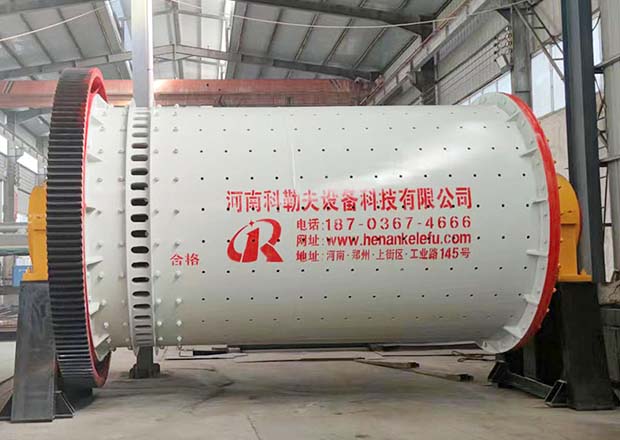
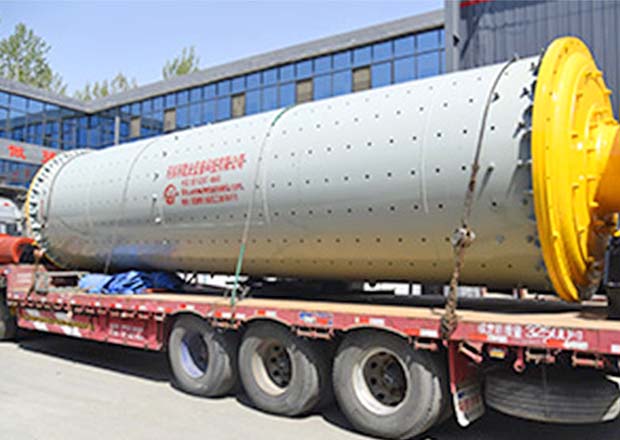
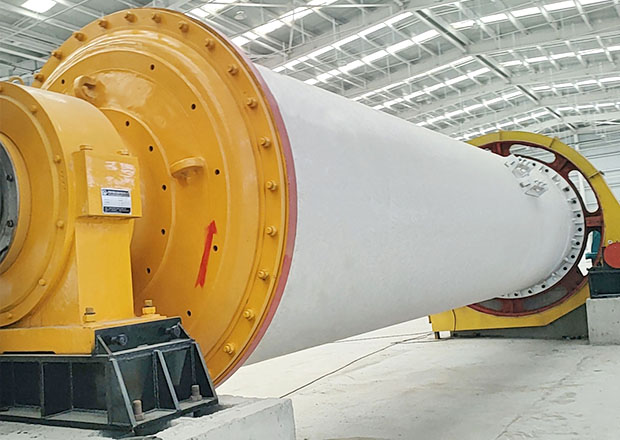
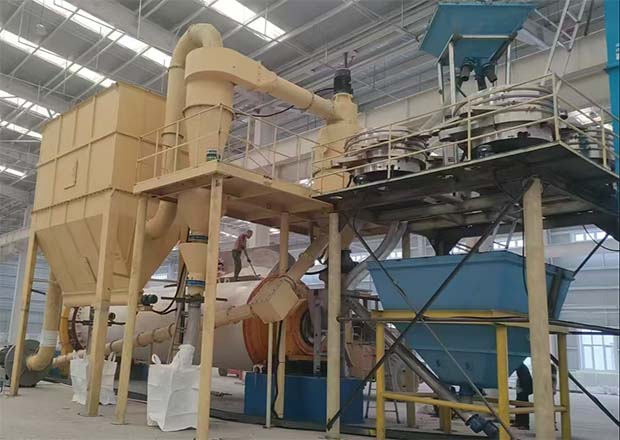
Kaolin ball mill (also called kaolin grinding mill or china clay ball mill) is a specialized grinding equipment used to produce finely ground kaolin powder for industries such as ceramics, paper, paint, rubber, and refractories. Kaolin (Al₂Si₂O₅(OH)₄) is a soft, white clay with Mohs hardness 2–2.5. However, raw kaolin often contains quartz, iron oxides, and other impurities that must be removed to achieve high whiteness and fine particle size.
Our kaolin ball mill can operate in two modes:
Dry grinding + air classifier – produces 1250–3000 mesh powder for filler applications (ceramics, rubber, paint)
Wet grinding + hydrocyclone + magnetic separator – produces ultra‑fine slurry (d97 = 2–5 µm) for paper coating
Because kaolin is soft and platelets must be preserved, the mill is designed for gentle grinding to avoid breaking the platy structure. As a professional ball mill manufacturer, we provide complete kaolin processing plants including crushing, grinding, classification, magnetic separation, bleaching, and drying.
Applicable materials: natural kaolin (primary and secondary), calcined kaolin, and ball clay.
Step 1 – Crushing & Drying
Raw kaolin is crushed to ≤10–20 mm and dried (if moisture >8%) to <3% moisture.
Step 2 – Feeding & Grinding
Material is fed into the ball mill with small‑medium balls (Φ20–50 mm). Low‑impact liners gently grind the kaolin.
Step 3 – Air Classification
Ground material is lifted to a dynamic air classifier. Fine particles (
Step 4 – Magnetic Separation (Optional)
Dry powder passes through a dry magnetic separator to remove iron oxides.
Step 5 – Collection & Packing
Ultra‑fine kaolin powder is collected by a bag filter and packed.
Step 1 – Slurry Preparation
Crushed kaolin is mixed with water and dispersant to form 60–70% solids slurry.
Step 2 – Wet Grinding
Slurry is pumped through a ball mill with small ceramic balls (Φ8–20 mm) and polyurethane or ceramic liners.
Step 3 – Hydrocyclone Classification
Discharged slurry goes to a hydrocyclone. Coarse (sand + quartz) is rejected; fine overflow continues.
Step 4 – Magnetic Separation
Slurry passes through a wet high‑intensity magnetic separator to remove iron particles.
Step 5 – Bleaching (Optional)
Chemical bleaching with hydrosulfite to increase brightness.
Step 6 – Storage
Final slurry is stored in tanks for paper mills or dried for powder.
Kaolin’s value comes from its platy structure. Over‑grinding produces fractured, blocky particles that reduce paper coating gloss and ceramic plasticity. Our mill features: Short cylinder (L/D ratio 2–2.5) – short retention time Low‑lifting liners – balls roll rather than impact Closed‑circuit with dynamic classifier – fine particles removed instantly Result: platelet shape is largely preserved, delivering high brightness and gloss.
Iron oxides (hematite, goethite) discolor kaolin. We offer: Ceramic lining + alumina balls – non‑metallic grinding, Fe₂O₃ <0.05% High chromium liners (HRC ≥58) – low‑iron steel option Wet high‑intensity magnetic separator (WHIMS) – removes fine iron particles down to 5 µm Bleaching (hydrosulfite) – optional chemical treatment for brightness >90%
Dry process: ball mill + air classifier → d97 = 10–5 µm (1250–3000 mesh) Wet process: ball mill (with small media) + hydrocyclone → d97 = 5–2 µm (ultra‑fine) Two‑stage grinding: ball mill + stirred media mill for d97 <2 µm (high‑gloss paper coating)
Raw kaolin often contains free quartz (sand). Our system includes: Hydrocyclone in wet process – removes >98% of +45 µm quartz Magnetic separator – removes iron‑coated quartz High chromium liners – resist abrasion from remaining quartz
| Model | Dia.×Length (m) | d97 (µm) | Capacity (t/h) | Motor Power (kW) |
|---|---|---|---|---|
| Φ1.5×3.5m | 1.5×3.5 | 10 | 1–1.5 | 55 |
| Φ1.83×4.5m | 1.83×4.5 | 10 | 2–3 | 110 |
| Φ2.2×5.5m | 2.2×5.5 | 8 | 3–5 | 185 |
| Φ2.4×6.5m | 2.4×6.5 | 8 | 5–8 | 280 |
| Φ2.6×8m | 2.6×8 | 5 | 8–12 | 400 |
| Φ3.0×9m | 3.0×9 | 5 | 12–18 | 630 |
Capacity for washed kaolin, feed ≤15mm, moisture <3%, target d97 as shown.
| Model | Dia.×Length (m) | d97 (µm) | Slurry Output (m³/h) | Solids (%) | Power (kW) |
|---|---|---|---|---|---|
| Φ2.2×6m | 2.2×6 | 5 | 5–10 | 65–70 | 220 |
| Φ2.4×7m | 2.4×7 | 4 | 10–18 | 65–70 | 350 |
| Φ2.6×8m | 2.6×8 | 3 | 15–25 | 65–70 | 500 |
| Φ3.0×9m | 3.0×9 | 2 | 25–40 | 65–70 | 800 |
| Parameter | Value |
|---|---|
| Max. feed size | ≤10–20 mm |
| Output fineness (d97) dry | 5 – 10 µm (1250 – 3000 Mesh) |
| Output fineness (d97) wet | 2 – 5 µm |
| Whiteness (GE) | 85 – 92% (depends on ore) |
| Iron content (Fe₂O₃) | <0.3% (with magnetic separation) |
| Feed moisture (dry) | <5% (higher requires pre‑drying) |
| Grinding method | Dry / Wet |
| Circuit type | Closed‑circuit |
| Liner material | High chromium steel / Polyurethane / Ceramic |
| Grinding media | Forged steel / High chromium / Alumina / Zirconia balls |
| Optional features | Air classifier, hydrocyclone, magnetic separator (dry/wet), bleaching tank, dryer |
When selecting a kaolin grinding mill, consider these seven factors:
Kaolin type & purity – Primary kaolin vs. secondary (sedimentary). Measure Fe₂O₃, TiO₂, and quartz content.
Target application & fineness –
Ceramics (body): 10–15 µm, whiteness 80–85%
Rubber/plastic filler: 5–10 µm, whiteness 85–88%
Paper filler: 5–8 µm, whiteness 86–90%
Paper coating: d97 = 2–5 µm, whiteness >88%, low viscosity
Dry or wet process?
Dry: lower capital cost, powder product, less effective iron removal
Wet: higher purity, ultra‑fine, better brightness, but requires drying if powder needed
Iron removal requirement – For paper coating, a wet high‑intensity magnetic separator (WHIMS) is essential. For ceramics, dry magnetic separation may suffice.
Capacity requirement – State required tons per hour (dry) or m³/h (slurry). We will match optimal kaolin ball mill capacity.
Need for bleaching – Some kaolin requires chemical bleaching to reach >90% brightness. We can integrate a bleaching tank.
After‑sales support – Installation, commissioning, training, and spare parts. Our team provides 24/7 support.
Kaolin grinding is unique because product brightness and platelet preservation are as important as particle size. Here is what you must know.
| Feature | Dry Grinding | Wet Grinding |
|---|---|---|
| Final product | Dry powder (moisture <1%) | Slurry (60–70% solids) or dried powder |
| Typical applications | Ceramic bodies, rubber filler, plastic filler | Paper coating, high‑gloss paint, premium ceramics |
| Fineness (d97) | 5–10 µm | 2–5 µm (finer possible) |
| Brightness potential | 85–88% | 88–92% (with magnetic sep + bleaching) |
| Iron removal efficiency | Moderate (dry magnetic sep) | High (WHIMS removes down to 5 µm) |
| Quartz removal | Difficult | Hydrocyclone removes +45 µm sand |
| Capital cost | Lower | Higher |
| Operating cost | Medium (power + bag filters) | Medium (power + water + chemicals) |
| Brightness Target | Required Steps |
|---|---|
| 85–87% | Crushing + dry or wet grinding + dry magnetic separation |
| 88–90% | Wet grinding + WHIMS + classification |
| 90–92% | Wet grinding + WHIMS + bleaching (hydrosulfite) |
| >92% | Two‑stage grinding + WHIMS + bleaching + calcination (optional) |
| Grinding Type | Effect on Platelets |
|---|---|
| Standard ball mill (high impact) | Breaks plates → reduced gloss, poor rheology |
| Our gentle ball mill (low impact, closed‑circuit) | Preserves plates → good gloss, high brightness |
| Wet grinding with small media | Best preservation (water cushions impact) |
Pro tip: For paper coating kaolin, always use wet grinding with a ceramic‑lined mill and small media (Φ8–15 mm) combined with WHIMS and hydrocyclones. This produces the high brightness, low viscosity, and fine particle size that paper mills demand. For ceramic body kaolin, dry grinding with magnetic separation is usually sufficient and more economical.
ISO9001 & CE certified – Strict quality control from raw material to final assembly.
20+ years in ultra‑fine grinding – Specialized in kaolin ball mills for ceramics, paper, and coatings.
Platelet preservation design – Short cylinder, low‑impact liners, closed‑circuit classification.
Iron removal expertise – Wet high‑intensity magnetic separators (WHIMS) and bleaching integration.
Dry & wet process – Complete systems for both powder and slurry applications.
Full process support – Lab test (whiteness, Fe₂O₃, d97, viscosity) → engineering → manufacturing → installation → commissioning → training.
Global service network – Engineers available for on‑site visit and 24/7 remote troubleshooting.
Kolev Equipment Technology Co., Ltd. is a large-scale private technology enterprise specializing in the research, development, production, and sales of mining and metal ore processing equipment. With over 20 years of experience in ultra-fine grinding, industrial drying, and crushing sand making industries, we provide intelligent solutions and mature supporting products worldwide.
Tell us your needs. We will match the best model for you and send a solution + reference quote within 24 hours.
We're here to help with all your inquiries. Send us a message and we'll get back to you promptly.
Fill out the form below and we'll contact you soon