
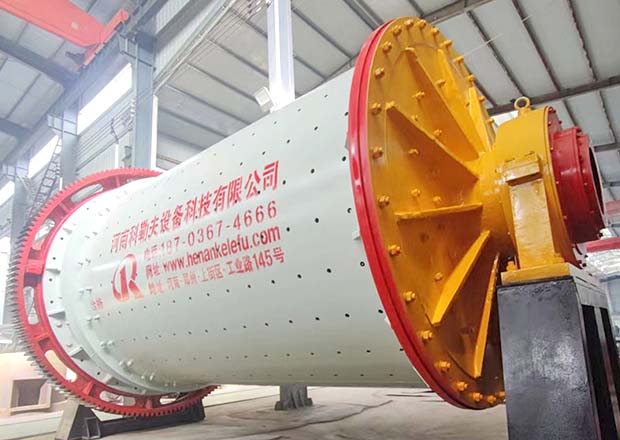
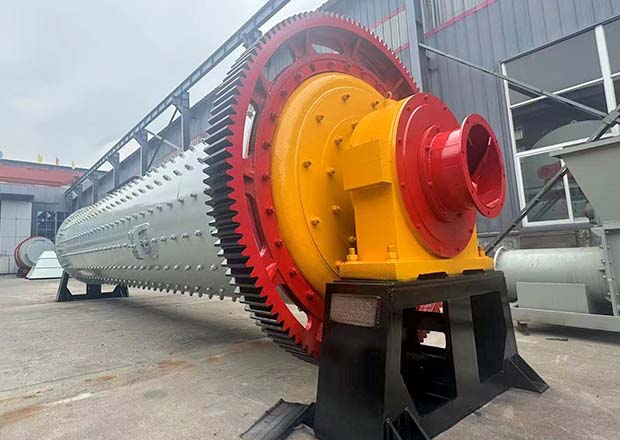
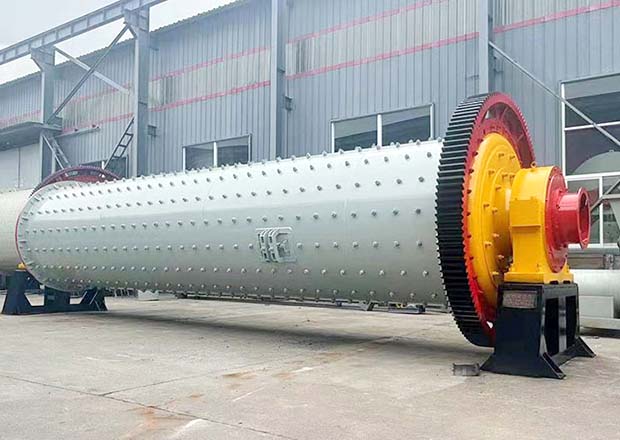
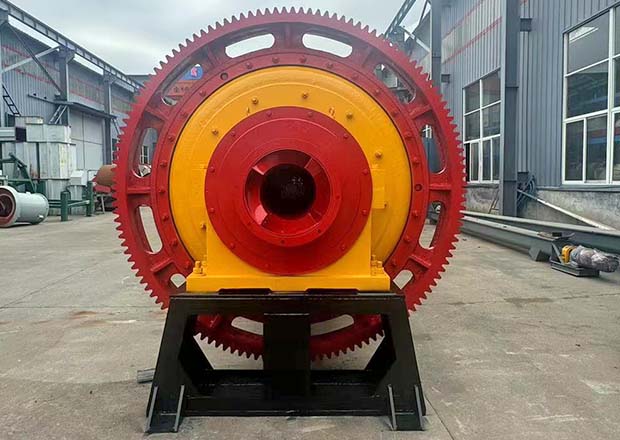
Feldspar ball mill (also called feldspar grinding mill) is a specialized grinding equipment used to produce finely ground feldspar powder for the ceramic, glass, enamel, and filler industries. Feldspar (potassium or sodium aluminum silicate) is a key fluxing agent in ceramics and glass manufacturing.
Feldspar ball mill (also called feldspar grinding mill) is a specialized grinding equipment used to produce finely ground feldspar powder for the ceramic, glass, enamel, and filler industries. Feldspar (potassium or sodium aluminum silicate) is a key fluxing agent in ceramics and glass manufacturing. The most critical quality requirements for feldspar powder are:
Low iron content (Fe₂O₃) – iron causes discoloration (gray/brown) in ceramics and glass
High whiteness (>85%) – essential for whiteware, tiles, and sanitaryware
Controlled particle size – typically 200–325 mesh (75–45 µm) for ceramic bodies; 325–400 mesh for glazes
Narrow particle size distribution – improves melting behavior and glaze uniformity
Our feldspar ball mill is a closed‑circuit system (ball mill + air classifier) designed to produce high‑purity, low‑iron feldspar powder. Because feldspar is brittle (Mohs 6–6.5) but not extremely hard, the mill is optimized for efficient grinding while minimizing iron contamination. As a professional ball mill manufacturer, we provide complete feldspar grinding plants including crushing, grinding, classification, magnetic separation, and drying (if needed).
Applicable materials: potassium feldspar (orthoclase, microcline), sodium feldspar (albite), and mixed feldspar.
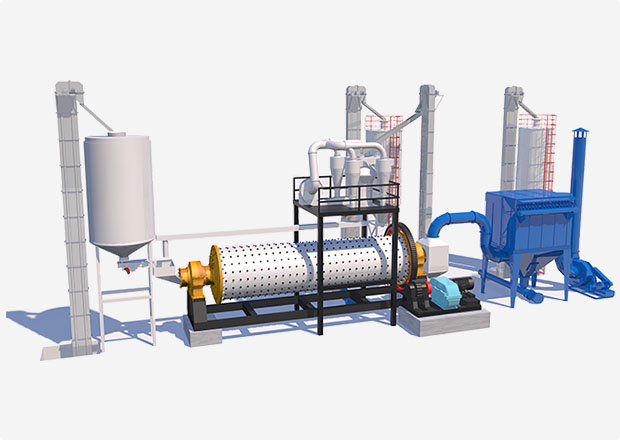
Step 1 – Crushing & Feeding
Feldspar ore is crushed to ≤10–20 mm and fed via a weigh belt feeder into the mill.
Step 2 – Coarse Grinding (Chamber 1)
The first chamber contains medium‑large steel or ceramic balls (Φ40–60 mm) with stepped liners. Balls crush the feldspar.
Step 3 – Fine Grinding (Chamber 2)
The second chamber contains smaller balls (Φ12–30 mm) and classifying liners for gentle fine grinding.
Step 4 – Air Classification
Material exits the mill and is lifted to a dynamic air classifier. Rotor speed determines cut point. Fine particles (
Step 5 – Magnetic Separation (Optional)
An optional magnetic separator (drum or electromagnetic) removes iron particles, improving whiteness.
Step 6 – Collection & Packing
Clean feldspar powder is collected by a bag filter and conveyed to a packing machine (bagging or bulk).
Iron contamination is the #1 enemy of feldspar quality. We offer multiple protection levels: Ceramic lining + alumina balls – completely non‑metallic grinding, Fe₂O₃ <0.08%, whiteness up to 92% High chromium alloy liners (HRC ≥58) + forged steel balls – Fe₂O₃ <0.20%, whiteness 85–88% Post‑mill magnetic separator (permanent drum or high‑intensity electromagnetic) – removes remaining iron particles
Feldspar is hard but brittle – it fractures easily. Our mill design: Short cylinder (L/D ratio 2–2.5) – short retention time Classifying liners in fine chamber Closed‑circuit with dynamic classifier – fines removed immediately Result: minimal slime production, better ceramic body properties.
Different applications require different fineness: 100–200 mesh (150–75 µm) – glass batch, enamel frit 200–325 mesh (75–45 µm) – ceramic body, tiles, sanitaryware 325–400 mesh (45–38 µm) – glazes, porcelain Our dynamic air classifier with variable rotor speed achieves any cut point with narrow PSD (span <1.5).
Potassium feldspar (orthoclase): harder, higher melting point – use larger media (Φ40–60 mm) in chamber 1 Sodium feldspar (albite): softer, more sticky – use smaller media (Φ20–40 mm) and polished liners to prevent adhesion
| Model | Dia.×Length (m) | Capacity (t/h) * | Fineness (Mesh) | Motor Power (kW) |
|---|---|---|---|---|
| Φ1.5×3.5m | 1.5×3.5 | 1–2 | 200–325 | 55 |
| Φ1.83×4.5m | 1.83×4.5 | 2–4 | 200–325 | 110 |
| Φ2.2×5.5m | 2.2×5.5 | 4–6 | 200–325 | 185 |
| Φ2.4×6.5m | 2.4×6.5 | 6–10 | 200–325 | 280 |
| Φ2.6×8m | 2.6×8 | 10–15 | 200–325 | 400 |
| Φ3.0×9m | 3.0×9 | 15–22 | 200–325 | 630 |
| Φ3.2×10m | 3.2×10 | 22–30 | 200–325 | 1000 |
*Capacity for potassium feldspar with feed ≤15mm, target 325 mesh. Sodium feldspar capacity +10–15%.*
| Model | Fineness (Mesh) | Capacity (t/h) | Motor Power (kW) |
|---|---|---|---|
| Φ2.6×8m | 400 | 6–10 | 400 |
| Φ3.0×9m | 400 | 12–18 | 630 |
| Φ3.2×10m | 400 | 18–25 | 1000 |
| Parameter | Value |
|---|---|
| Max. feed size | ≤10–20 mm |
| Output fineness (d97) | 150 – 38 µm (100 – 400 Mesh) |
| Whiteness (typical) | 85 – 92% (after magnetic separation) |
| Iron content (Fe₂O₃) | Steel mill: <0.2–0.3% / Ceramic: <0.08% |
| Moisture (feed) | <5% (higher requires drying) |
| Grinding method | Dry |
| Circuit type | Closed‑circuit (mandatory) |
| Number of chambers | 2 |
| Liner material | High chromium steel / Alumina ceramic |
| Grinding media | Forged steel / High chromium / Alumina balls |
| Optional features | Dynamic classifier, magnetic separator, bag filter, drying system |
When selecting a feldspar grinding mill, consider these seven factors:
Feldspar type & iron content – Potassium (K‑spar) vs. sodium (Na‑spar). Measure Fe₂O₃ in raw ore. Higher iron requires more aggressive magnetic separation.
Target application & whiteness –
Ceramic body / tiles: whiteness 85–88%, Fe₂O₃ <0.2%, 200–325 mesh
Glazes / porcelain: whiteness >90%, Fe₂O₃ <0.1%, 325–400 mesh
Glass batch: whiteness 80–85% acceptable, coarser mesh
Target fineness (d97) – Specify mesh or micron size.
Iron limit & budget – For premium glazes: choose ceramic lining + alumina balls + magnetic separator. For standard ceramic body: high chromium steel + magnetic separator is sufficient.
Capacity requirement – State required tons per hour. We will match optimal feldspar ball mill capacity.
Moisture content – Above 5% moisture requires a drying stage (flash dryer or hot gas in mill).
After‑sales support – Installation, commissioning, training, and spare parts. Our team provides 24/7 support.
Feldspar grinding is unique because product whiteness and iron content directly affect ceramic color. Here is what you must know.
| Iron Source | Effect on Ceramic/Glass |
|---|---|
| Fe₂O₃ (hematite) | Red/brown color in fired body or glass |
| Fe₃O₄ (magnetite) | Black spots |
| Metallic iron (from grinding) | Gray/black specks, glaze defects |
Allowable limits:
Premium glaze: Fe₂O₃ <0.08%
White ceramic body: Fe₂O₃ <0.20%
Colored ceramic: Fe₂O₃ <0.50%
| Property | Potassium Feldspar (K‑spar) | Sodium Feldspar (Na‑spar) |
|---|---|---|
| Hardness (Mohs) | 6 – 6.5 | 6 – 6.5 (slightly softer) |
| Brittleness | High | Medium |
| Melting point | Higher (1200°C+) | Lower (1100°C+) |
| Grindability | Standard | Easier (10–15% higher capacity) |
| Stickiness | Low | Medium (can adhere to liners) |
| Recommended media | Φ40–60 mm in coarse chamber | Φ30–50 mm + polished liners |
| Iron sensitivity | High (used in whiteware) | Very high (used in glazes) |
| Application | Grinding Setup | Magnetic Separation |
|---|---|---|
| K‑spar for ceramic body | High chromium liners + steel balls | Single drum magnet |
| K‑spar for glaze | Ceramic lining + alumina balls + magnetic separator | High‑intensity electromagnetic |
| Na‑spar for ceramic body | High chromium + polished liners + small balls | Drum magnet + cross‑belt |
| Na‑spar for premium glaze | Ceramic lining + alumina balls + double magnetic separation | Two electromagnetic stages |
Pro tip: If your feldspar is for high‑end white glaze, never use steel grinding media – even high chromium steel leaves microscratches and iron traces. A ceramic‑lined ball mill with alumina balls is the only acceptable solution. We supply complete iron‑free grinding systems for glaze‑grade feldspar.
ISO9001 & CE certified – Strict quality control from raw material to final assembly.
20+ years in grinding equipment – Specialized in feldspar ball mills for ceramics and glass industries.
Iron‑free grinding expertise – Ceramic lining, alumina balls, and high‑intensity magnetic separators for ultra‑low Fe₂O₃.
Precision classification – Dynamic air classifier with PLC control for d97 = 38–150 µm.
K‑spar & Na‑spar optimized design – Different liner and media configurations for each type.
Full process support – Lab test (whiteness, Fe₂O₃, d97) → engineering → manufacturing → installation → commissioning → training.
Global service network – Engineers available for on‑site visit and 24/7 remote troubleshooting.
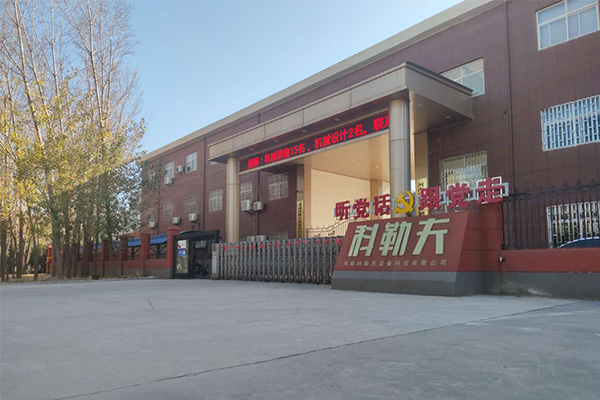
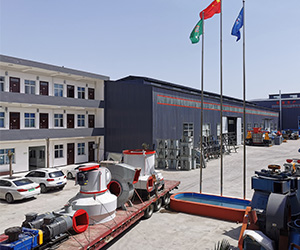
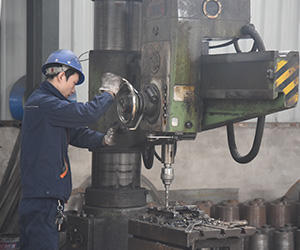
Kolev Equipment Technology Co., Ltd. is a large-scale private technology enterprise specializing in the research, development, production, and sales of mining and metal ore processing equipment. With over 20 years of experience in ultra-fine grinding, industrial drying, and crushing sand making industries, we provide intelligent solutions and mature supporting products worldwide.
Tell us your needs. We will match the best model for you and send a solution + reference quote within 24 hours.
We're here to help with all your inquiries. Send us a message and we'll get back to you promptly.
Fill out the form below and we'll contact you soon