
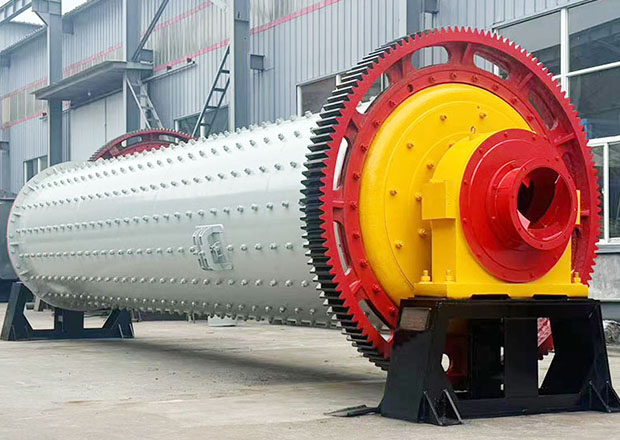
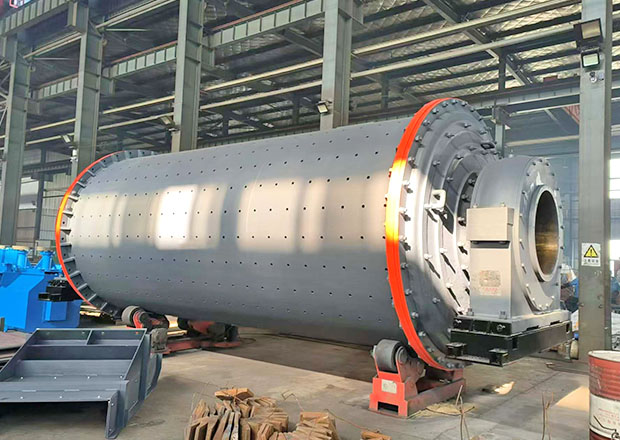
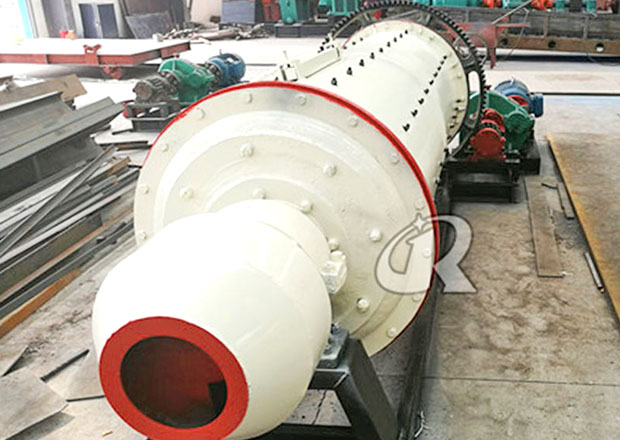
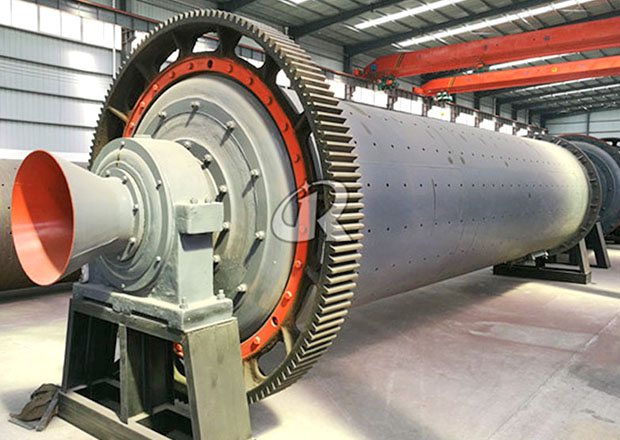
The Right Grinding Solution for Every Material – Dry or Wet, One Trusted Source Complete range of dry ball mills and wet ball mills for mineral processing, cement, ceramics, chemicals, and industrial minerals. Whether you need a dry ball mill for fine powder production or a wet ball mill for slurry and flotation feed preparation, we provide both technologies with optimized liner, media, and circuit configurations. Our dry grinding systems deliver precise particle control with air classifiers; our wet grinding systems ensure high throughput with hydrocyclone classification. Choose the process that fits your material and downstream needs — trusted by mining, cement, and mineral processing plants worldwide.
Dry Ball Mill vs. Wet Ball Mill: Which One Fits Your Material?
Dry Ball Mill — Best For:
· Materials with low moisture content (<5%) — No need for subsequent drying
· Dry powder products — Cement, GCC filler, ceramic body powder, battery materials
· Iron-sensitive white minerals — Calcite, marble, kaolin, quartz (with ceramic lining)
· Simultaneous drying & grinding — With hot air sweep for moist feed (up to 15% moisture)
· Typical Materials: Cement clinker, limestone, calcite, marble, quartz, feldspar, fly ash, slag, coal, alumina, lithium compounds
Wet Ball Mill — Best For:
· Materials already in slurry form — Flotation feed, leaching feed, FGD limestone
· Ultra-fine grinding (D97 <10µm) — Wet grinding is more energy-efficient for sub-10µm sizes
· Dust-sensitive or hazardous materials — Eliminates airborne dust during processing
· Materials requiring chemical reaction during grinding — Acid or alkali leaching
· Typical Materials: Gold/copper/iron ore, silica sand, kaolin clay, alumina, zirconia, battery precursors, FGD gypsum
Quick Comparison Table:
| Factor | Dry Ball Mill | Wet Ball Mill |
|---|---|---|
| Feed moisture | <5% (or hot air system) | Any (slurry feed) |
| Product fineness | 10-75µm (D97) | 1-75µm (D97) |
| Specific energy (for fine) | Higher | Lower (15-30% less) |
| Dust control | Baghouse required | Minimal dust |
| Liner/media wear | Lower (no slurry) | Higher (slurry abrasion) |
| Water consumption | None/minimal | Process water needed |
| Downstream drying | Not needed | Required for dry product |
Dry Ball Mill Process Flow:
Crushing & Dosing — Material crushed to ≤25mm, precisely weighed and fed into the dry ball mill.
Grinding & Hot Air Drying (Optional) — Material is ground by cascading media. Hot air (200-400°C) can be introduced for simultaneous drying.
Air Classification — Ground powder is air-conveyed to a dynamic air classifier. Fine product passes through; coarse returns to mill.
Dust Collection — Product powder is collected in a baghouse filter and stored in silos.
Packing — Packed into bags or loaded in bulk.
Wet Ball Mill Process Flow:
Slurry Preparation & Feeding — Material and water (or process solution) are fed into the wet ball mill at a controlled ratio.
Grinding in Slurry — Material is ground in a water/solution medium, which aids cooling and particle transport.
Hydrocyclone Classification — Mill discharge slurry is pumped to hydrocyclones. Fine overflow is product; coarse underflow returns to mill.
Dewatering (Optional) — If dry product is required, slurry is thickened and filtered (filter press or vacuum filter).
Storage or Further Processing — Slurry goes to flotation/leaching tanks; dry cake goes to dryer or storage.
Dry Ball Mill Standard Models (Closed-Circuit with Air Classifier)
| Model | Dia.×Length (m) | Capacity (t/h) | Motor Power (kW) | Typical Product | Air Classifier |
|---|---|---|---|---|---|
| Φ1.8×7m | 1.8×7 | 4-8 | 185 | 200-325 mesh | Single turbo |
| Φ2.2×7m | 2.2×7 | 8-15 | 245 | 200-800 mesh | Single turbo |
| Φ2.4×8m | 2.4×8 | 15-25 | 315 | 200-1250 mesh | Multi turbo |
| Φ2.4×13m | 2.4×13 | 25-40 | 450 | 200-1250 mesh | Multi turbo |
| Φ3.2×9m | 3.2×9 | 40-70 | 800 | 200-800 mesh | Multi turbo |
Wet Ball Mill Standard Models (Closed-Circuit with Hydrocyclone)
| Model | Dia.×Length (m) | Capacity (t/h) | Motor Power (kW) | Typical Product | Hydrocyclone |
|---|---|---|---|---|---|
| Φ1.8×3.6m | 1.8×3.6 | 5-10 | 185 | 100-325 mesh | 1×Φ250-350 |
| Φ2.2×4.5m | 2.2×4.5 | 12-25 | 310 | 100-325 mesh | 2×Φ350 |
| Φ2.4×6.0m | 2.4×6.0 | 25-45 | 450 | 100-400 mesh | 3×Φ350 |
| Φ2.8×6.5m | 2.8×6.5 | 40-70 | 710 | 100-400 mesh | 4×Φ350 |
| Φ3.2×7.0m | 3.2×7.0 | 60-100 | 1000 | 100-400 mesh | 6×Φ350 |
Proven Performance: Dry & Wet Ball Mill Installations Worldwide
Case 1: Dry Ball Mill — 100,000 TPY Calcite Powder Plant, Southeast Asia
· System: Φ2.4×8m dry ball mill + multi-stage turbo classifier + ceramic lining
· Material: Calcite, Bond Wi 10.5 kWh/t, moisture 3%
· Product: GCC powder, D97=10µm, whiteness 96% ISO
· Result: Specific power 38 kW·h/t. Zero iron contamination. Commissioned in 10 months.
Case 2: Wet Ball Mill — 500,000 TPY Gold Ore Grinding Circuit, Africa
· System: Φ3.2×7.0m wet ball mill + hydrocyclone cluster (6×Φ350)
· Material: Gold ore, Bond Wi 18 kWh/t, feed ≤25mm
· Product: Flotation feed, P80=75µm, slurry density 65% solids
· Result: Throughput 85 t/h. Specific power 12 kW·h/t. Plant availability >92%.
Case 3: Dual System — Dry for GCC, Wet for Ceramic Slip, Middle East
· Scope: One factory, two parallel lines
· Line 1: Φ2.2×7m dry ball mill + air classifier — producing 200-800 mesh GCC filler
· Line 2: Φ2.2×4.5m wet ball mill + hydrocyclone — producing ceramic body slip for sanitaryware
· Result: Both systems supplied by a single manufacturer, reducing project management complexity. Combined output 60,000 TPY.
Quality Assurance for Both Dry & Wet Systems
· Single-Source Supply: Both your dry ball mill and wet ball mill come from one manufacturer — consistent quality standards, unified documentation, and one point of contact for after-sales.
· Pre-Delivery Testing: Each mill is test-assembled and run without load before shipment. Wet mills undergo hydrostatic testing of the slurry seal system.
· Material Test Before Design: We run both dry and wet grindability tests on your sample to determine the optimal system and guarantee performance.
· Wear Parts Supply: Liners, grinding media, classifier rotors, and hydrocyclone liners for both dry and wet systems are stocked regionally.
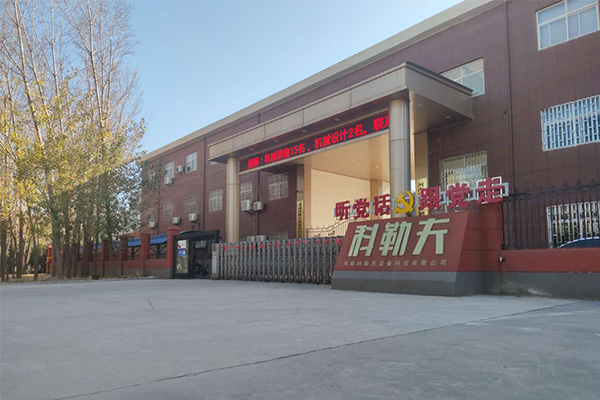
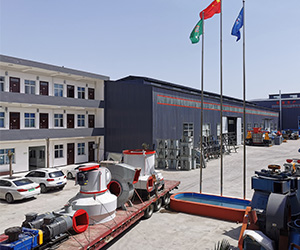
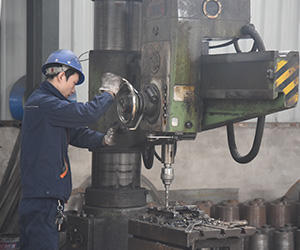
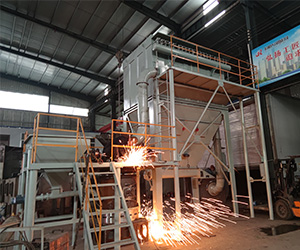
Kolev Equipment Technology Co., Ltd. is a large-scale private technology enterprise specializing in the research, development, production, and sales of mining and metal ore processing equipment. With over 20 years of experience in ultra-fine grinding, industrial drying, and crushing sand making industries, we provide intelligent solutions and mature supporting products worldwide.
Tell us your needs. We will match the best model for you and send a solution + reference quote within 24 hours.
We're here to help with all your inquiries. Send us a message and we'll get back to you promptly.
Fill out the form below and we'll contact you soon