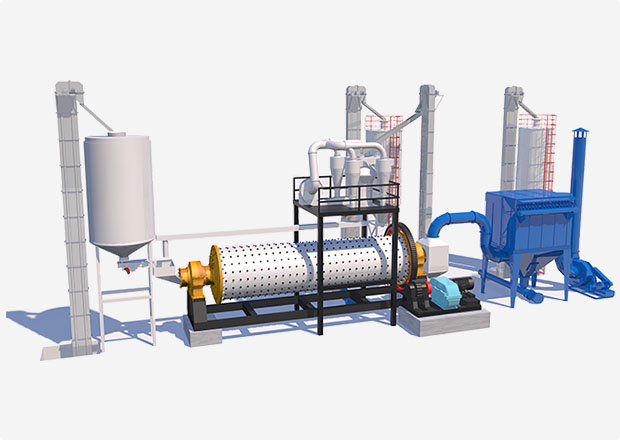
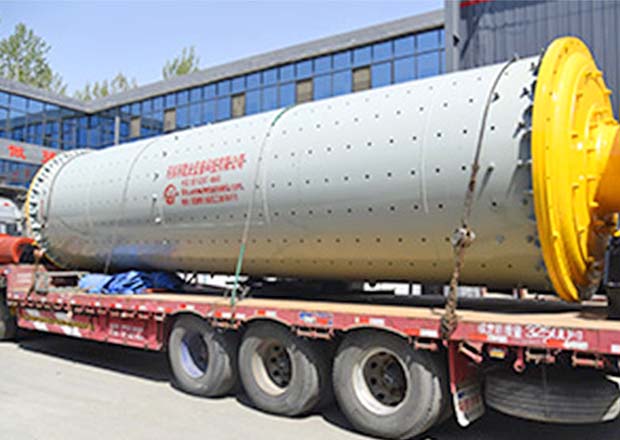
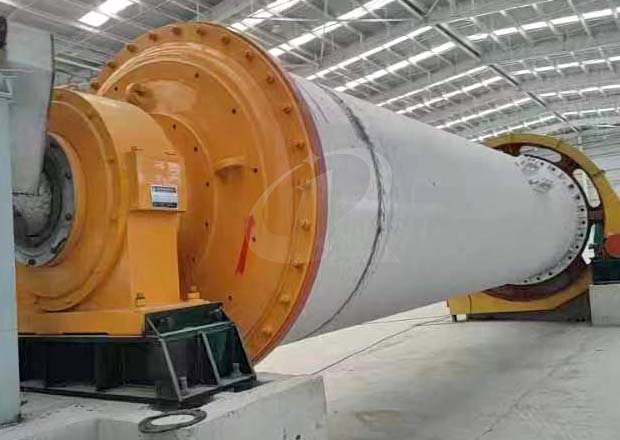
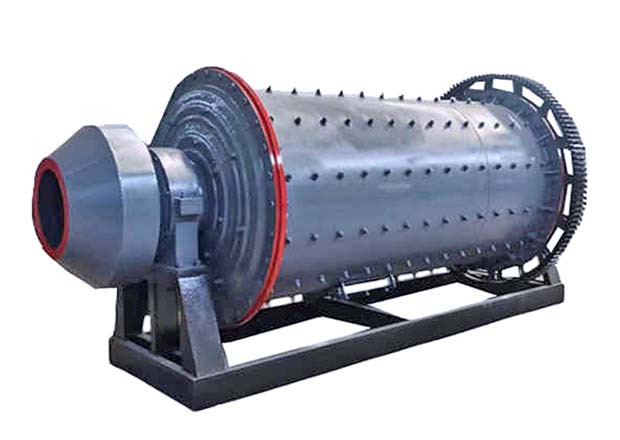
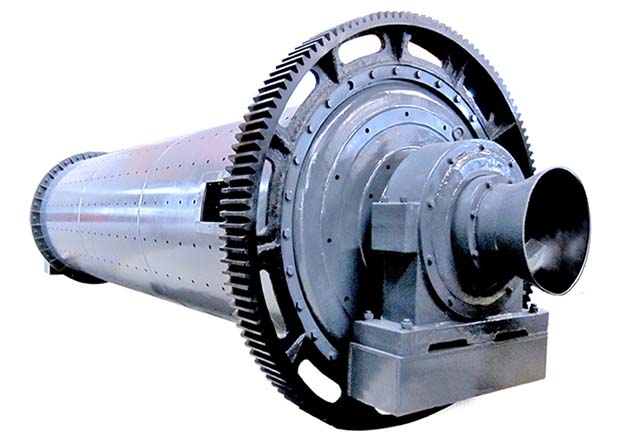
Bentonite ball mill (also called bentonite grinding mill or activated clay ball mill) is a specialized grinding equipment used to produce finely ground bentonite powder for a wide range of industrial applications. Bentonite is a clay mineral primarily composed of montmorillonite, known for its unique properties: swelling, thixotropy, high water absorption, and cation exchange capacity. These properties must be preserved during grinding – over‑grinding or excessive heat can destroy the layered structure and reduce performance.
Our bentonite ball mill is designed for gentle, temperature‑controlled dry grinding. The mill operates in a closed circuit with an air classifier, allowing precise control of particle size while maintaining low mill temperature (outlet <80°C). As a professional ball mill manufacturer, we provide complete bentonite processing lines including drying (if raw moisture >10%), grinding, classification, and optional sodium activation (conversion of calcium bentonite to sodium bentonite).
Applicable materials: sodium bentonite, calcium bentonite, activated bentonite, and fullers earth.
Step 1 – Pre‑Drying (if needed)
Raw bentonite (moisture 15–30%) is dried in a flash dryer or rotary dryer to <10% moisture.
Step 2 – Sodium Activation (optional)
Dried bentonite is mixed with 2–5% soda ash in a mixer, then aged for 24–72 hours.
Step 3 – Feeding & Grinding
Activated or natural bentonite (≤20 mm) is fed into the ball mill. The mill contains small‑medium balls (Φ15–50 mm) with low‑lifting liners. Water spray cooling keeps mill temperature low.
Step 4 – Air Classification
Ground material is lifted to a dynamic air classifier. Rotor speed determines cut point. Fines (
Step 5 – Collection
Fine bentonite powder is collected by a bag filter (with anti‑static filter bags if needed). Product moisture is typically 6–10% to preserve swelling.
Step 6 – Packing
Powder is packed into bags (25/50 kg, or bulk) for shipping.
Bentonite’s value depends on its montmorillonite structure. Our mill design protects it: Closed‑circuit operation – fine particles removed immediately, no over‑grinding Low grinding temperature – water spray cooling on shell + high airflow (outlet <80°C) Gentle grinding action – short cylinder, low‑lifting liners, small media (Φ15–40 mm) Result: High swelling yield (>80 bbl/ton for sodium bentonite) and stable viscosity.
Bentonite is notorious for sticking to equipment. Our solutions: Rubber or polyurethane liners – reduce adhesion Polished steel liners – smooth surface Air sweeps – blow material off grinding media Hydrophobic coating of liners (optional)
Different applications require different fineness: Drilling mud (API): 200 mesh (75 µm) with <30% <200 mesh, >85% <200 mesh is typical Foundry sand: 100–200 mesh (150–75 µm) Pelletizing: 200 mesh (75 µm) with high Blaine (400–500 m²/kg) Cat litter / absorbents: 6–20 mesh (coarse granules, not milled) Our dynamic air classifier produces narrow PSD with adjustable cut point (d97 = 38–150 µm). PLC control maintains consistency.
We offer two optional upgrades: Drying‑grinding mill – accepts bentonite with 12–15% moisture, using hot gas (150–200°C) to dry during grinding. Eliminates a separate dryer. Sodium activation system – mixer + aging pugmill to convert calcium bentonite to sodium bentonite (add 2–5% soda ash). Improves swelling yield by 50–100%.
| Model | Dia.×Length (m) | Capacity (t/h) * | Fineness (Mesh) | Motor Power (kW) |
|---|---|---|---|---|
| Φ1.5×3.5m | 1.5×3.5 | 2–3 | 200 | 55 |
| Φ1.83×4.5m | 1.83×4.5 | 4–6 | 200 | 110 |
| Φ2.2×5.5m | 2.2×5.5 | 6–9 | 200 | 185 |
| Φ2.4×6.5m | 2.4×6.5 | 10–14 | 200 | 280 |
| Φ2.6×8m | 2.6×8 | 14–20 | 200 | 400 |
| Φ3.0×9m | 3.0×9 | 20–28 | 200 | 630 |
| Φ3.2×10m | 3.2×10 | 28–35 | 200 | 1000 |
Capacity for sodium bentonite, feed ≤15mm, moisture <10%, target 200 mesh. Add 20% for calcium bentonite (easier to grind).
| Model | Capacity (t/h) | Fineness (Mesh) | Power (kW) |
|---|---|---|---|
| Φ2.4×6.5m | 8–11 | 325 | 280 |
| Φ2.6×8m | 12–17 | 325 | 400 |
| Φ3.0×9m | 17–24 | 325 | 630 |
| Parameter | Value |
|---|---|
| Max. feed size | ≤10–20 mm |
| Output fineness (d97) | 150 – 38 µm (100 – 400 Mesh) |
| Product moisture | 6 – 10% (adjustable by drying) |
| Feed moisture (dry mill) | ≤10% (higher requires pre‑drying) |
| Grinding method | Dry |
| Circuit type | Closed‑circuit |
| Number of chambers | 2 |
| Liner material | High chromium steel / Rubber / Polyurethane |
| Grinding media | Forged steel / High chromium balls (Φ15–50 mm) |
| Optional features | Flash dryer, sodium activation mixer, anti‑static bag filter, water spray cooling |
When selecting a bentonite grinding mill, consider these seven factors:
Bentonite type – Sodium bentonite (high swelling) or calcium bentonite (needs activation). Measure swelling index and yield.
Raw moisture content – Below 10%: standard dry mill. Above 10%: need pre‑drying (flash dryer) or drying‑grinding mill.
Target application & fineness –
Drilling mud (API): 200 mesh (75 µm), yield >80 bbl/ton, moisture 6–10%
Foundry sand: 100–200 mesh (150–75 µm)
Pelletizing: 200 mesh with Blaine >450 m²/kg
Cat litter / absorbents: 6–20 mesh (no fine grinding)
Need for sodium activation – If your bentonite is calcium type, you must add a mixing + aging system to convert to sodium bentonite for high swelling applications.
Capacity requirement – State required tons per hour. We will match optimal bentonite ball mill capacity.
Temperature control – Ensure the system includes water spray cooling and airflow management to keep mill outlet <80°C.
After‑sales support – Installation, commissioning, training, and spare parts. Our team provides 24/7 support.
Bentonite grinding is unique because the product’s swelling capacity is more important than particle size alone. Here is what you must know.
| Grinding Condition | Effect on Swelling |
|---|---|
| Ideal (closed‑circuit, T<80°C) | High yield, good rheology |
| Over‑grinding | Fines break lattice edges, reduced swelling |
| High temperature (>120°C) | Dehydration of interlayer water, permanent damage |
| Open circuit | Wide PSD, over‑grinding common |
| Parameter | API 13A Specification |
|---|---|
| Yield (bbl/ton) | ≥80 (typically 90–110) |
| 200 mesh residue | ≤4% |
| Moisture | ≤10% |
| Viscosity (600 rpm) | ≥30 cP |
| Filtration (API) | ≤15 cm³ |
Our system consistently meets or exceeds these values when used with proper sodium activation.
| Bentonite Type | Swelling Yield (bbl/ton) | Need Activation? |
|---|---|---|
| Natural sodium bentonite | 90–120 | No |
| Natural calcium bentonite | 15–30 | Yes |
| Activated calcium bentonite (2–5% soda ash) | 80–110 | Yes |
Our activation system:
Mixer (pugmill or ribbon blender) – mixes bentonite with soda ash and water (30–35% moisture)
Aging pad or silo – 24–72 hours curing
Dryer – reduces moisture to <10% before grinding
| Problem | Our Solution |
|---|---|
| Bentonite sticks to mill liners | Rubber/polyurethane liners, polished steel |
| Media packing (balls stick together) | Small media (Φ15–40 mm), air sweep |
| Bag filter blinding | Anti‑static filter bags (for dry bentonite) |
| Feed chute blockage | Vibrating feeder + heated hopper (optional) |
Pro tip: If you are producing bentonite for drilling mud, never grind without temperature control. Even 10 minutes of overheating can permanently reduce yield by 30–50%. Our water spray cooling system maintains mill temperature below 80°C even in continuous operation. For calcium bentonite, sodium activation before grinding is essential – skip this step and your product will fail API tests.
ISO9001 & CE certified – Strict quality control from raw material to final assembly.
20+ years in clay grinding – Specialized in bentonite ball mills for drilling mud, foundry, and pelletizing.
Structure‑preserving design – Closed‑circuit, low temperature (<80°C), low‑impact grinding.
Anti‑sticking technology – Rubber/polyurethane liners, air sweep, polished surfaces.
Sodium activation integrated – Complete systems for converting calcium bentonite to API‑grade sodium bentonite.
Drying‑grinding options – Flash dryer or hot gas mill for high‑moisture feed.
Full process support – Lab test (swelling yield, viscosity, PSD) → engineering → manufacturing → installation → commissioning → training.
Global service network – Engineers available for on‑site visit and 24/7 remote troubleshooting.
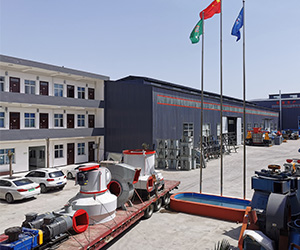
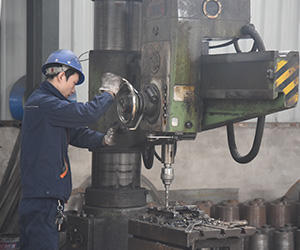
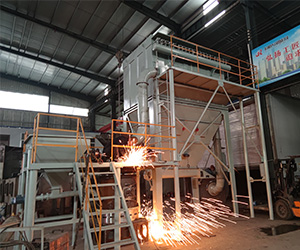
Kolev Equipment Technology Co., Ltd. is a large-scale private technology enterprise specializing in the research, development, production, and sales of mining and metal ore processing equipment. With over 20 years of experience in ultra-fine grinding, industrial drying, and crushing sand making industries, we provide intelligent solutions and mature supporting products worldwide.
Tell us your needs. We will match the best model for you and send a solution + reference quote within 24 hours.
We're here to help with all your inquiries. Send us a message and we'll get back to you promptly.
Fill out the form below and we'll contact you soon